Loading...
Serving Palm Bay, FL and surrounding areas. (321) 294-0342
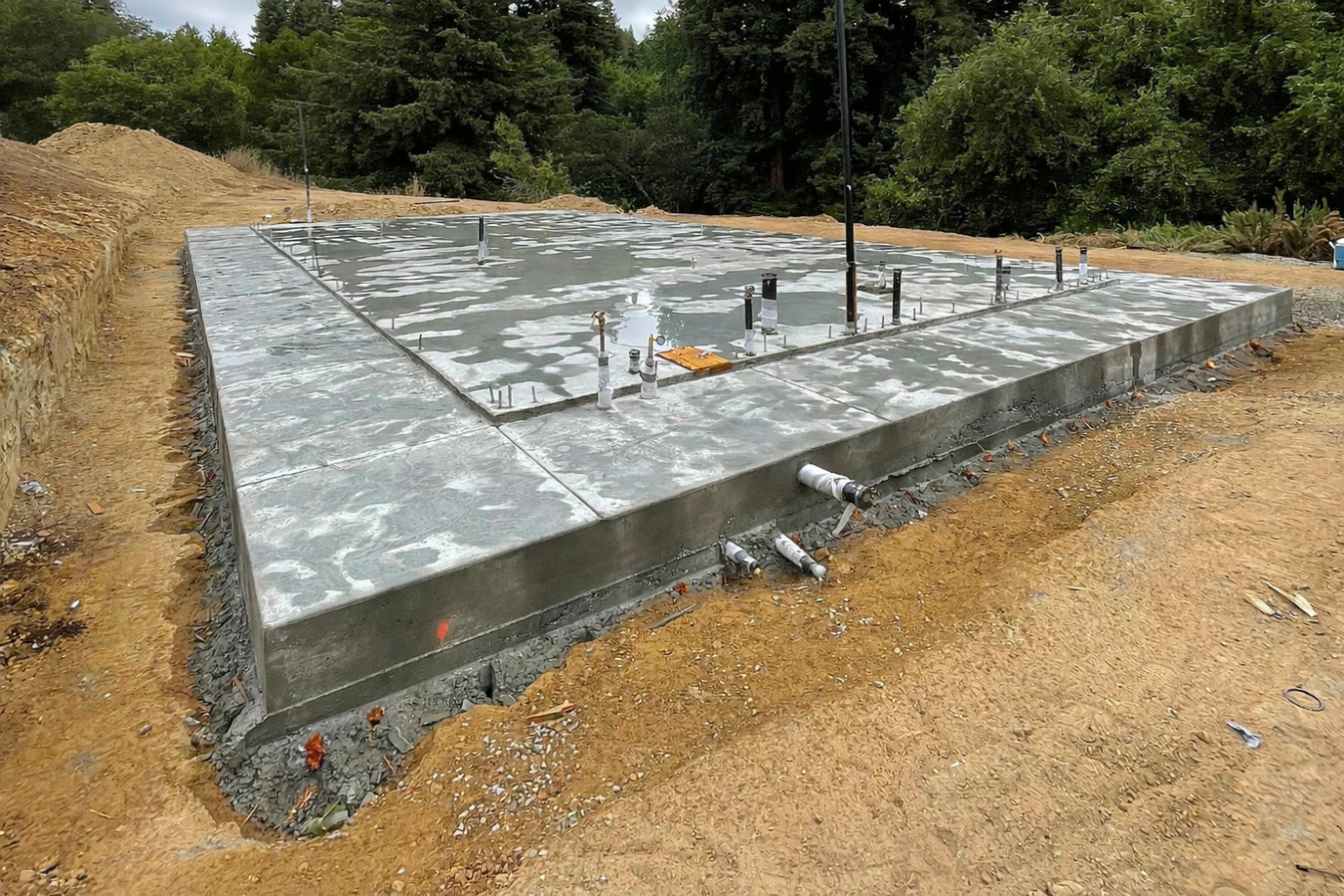
Palm Bay's sandy soil and high water table demand more than a basic pour. We handle every step - from compaction to the county inspection - so your foundation stays level for decades.
Slab foundation building in Palm Bay means pouring a reinforced concrete base directly on prepared ground, with most residential projects completed in two to four weeks from permit to final inspection - including two to three days of site prep and a single-day pour.
Most Palm Bay homeowners need a slab foundation when building a new home, adding a room, or enclosing a garage. The local soil conditions make preparation critical - rush that step and the slab will shift. If your project also involves supporting walls or columns, take a look at our concrete footings work, which pairs directly with slab construction.
Once the slab is poured and cured, many homeowners move on to foundation installation for outbuildings or additions on the same property. We handle both scopes and can coordinate the permit process across your entire project.
The clearest sign you need a slab is a cleared lot and a set of house plans. In Palm Bay, virtually all new single-family homes are built on slab foundations because the local soil conditions and high water table make other types impractical. If you have a building permit in progress, the slab is almost certainly your starting point.
Cracks running diagonally from door corners, or ridges you feel when walking across the floor, suggest the slab is shifting. In Palm Bay, this is often caused by sandy, loosely compacted soil compressing unevenly beneath the slab over time. Cracks you can fit a coin into, or cracks that are widening, are worth a professional evaluation before they get worse.
When a slab moves, the walls above it move with it. The first signs are usually doors that stick or windows that are suddenly hard to open. Gaps appearing where walls meet the floor are another indicator. In Palm Bay's climate, this can develop gradually as moisture levels in the soil cycle through wet and dry seasons.
A persistent musty smell, slightly damp flooring, or tiles lifting at the edges can all point to a failed or absent vapor barrier under the slab. Palm Bay's high water table means ground moisture is always looking for a path upward. Catching this early costs far less than dealing with mold or damaged flooring materials after years of exposure.
We build residential slab foundations from the ground up - handling site clearing, grading, mechanical soil compaction, vapor barrier installation, rebar layout, concrete forming, and the pour itself. We also coordinate the full Brevard County permit process, including scheduling the pre-pour and final inspections. For homeowners building an addition that connects to an existing foundation, we assess the current slab condition and match the new pour to it. If your project includes a detached structure, our foundation installation service covers those separate pours under the same management.
For projects that require individual column or wall support independent of the main slab, we also provide concrete footings - the thickened concrete pads and perimeter beams that carry the heaviest loads. Many larger builds in Palm Bay require both a main slab and separate footings, and we can manage both under a single contract and permit application.
Suits homeowners building a new single-family residence who need a full slab with permitted site prep, rebar, vapor barrier, and county inspections.
Suits homeowners adding a bedroom, sunroom, or enclosed porch who need a new slab section that connects to or matches their existing foundation.
Suits homeowners converting a garage, building a detached garage, or adding an accessory dwelling unit that requires its own permitted concrete base.
Suits new construction projects where the building design requires thickened-edge footings or interior beam pockets for heavier structural loads.
Palm Bay sits on sandy coastal plain soil where the water table is often close to the surface, particularly in areas near the St. Johns River marsh system. That combination - loose soil and persistent ground moisture - means site preparation is not a formality here. It is the part of the job that determines whether your slab stays flat and dry for 30 years or starts showing problems in five. Florida's building code also requires anchor bolts embedded in the slab at specific intervals to tie your home's frame to the foundation against hurricane-force winds - a requirement strictly enforced during Brevard County inspections.
We work across all of Palm Bay, including the established neighborhoods in Melbourne and the newer subdivisions expanding into Viera West. Both areas sit on the same Brevard County sandy fill and share the same permit requirements, but lot conditions and drainage patterns can vary significantly block by block. We visit every site before quoting to assess actual soil and drainage conditions - not just the address.
We visit your lot to assess soil conditions, drainage, and site access before giving you a price. We reply within one business day of your inquiry. Be cautious of any contractor who quotes a slab over the phone without seeing the site - conditions vary significantly across Palm Bay.
We submit the permit application to Brevard County Building Services on your behalf, including your site plan and foundation drawings. Approval typically takes one to two weeks. You get a copy of the approved permit before any work begins.
The crew grades the lot, mechanically compacts the soil, installs the vapor barrier, sets the forms, and lays the rebar. A county inspector verifies this work before the pour - this pre-pour inspection is required and protects you by confirming the hidden work is done correctly.
The concrete pour for a typical home slab is completed in a single day. The slab then cures for at least seven days - in Palm Bay's heat, we wet-cure to prevent surface cracking. A final county inspection closes the permit and you receive the documentation.
We visit the site, assess soil and drainage conditions, and give you a written quote. No pressure. Reply within one business day.
(321) 294-0342We submit every permit application, schedule every required county inspection, and hand you the closed-out permit documentation when the job is done. Your home's permit record is clean - which matters when you sell or refinance.
Sandy, loosely packed ground is the most common reason slabs crack in Brevard County. We take the time to properly compact the base and address drainage before a single drop of concrete is placed. That step is not negotiable on our jobs.
Florida's building code requires anchor bolts embedded in the slab at specific intervals to tie the home's frame to the foundation. Palm Bay is in a wind-borne debris region and these requirements are enforced during inspection. We build them in on every pour - they are standard, not an add-on.
The American Concrete Institute recommends a continuous moisture barrier with no gaps or overlaps on every residential slab. We follow that standard on every job - because a properly installed barrier costs far less than dealing with damp floors or mold years later. More at concrete.org.
Every slab we build in Palm Bay goes through a required county inspection before the pour and again after completion - giving you an independent check that the work was done correctly. That combination of proper site preparation, code-compliant construction, and verified inspections is what separates a foundation that lasts from one that causes problems.
Florida contractors performing structural concrete work must hold a current state license. You can verify any contractor's license and check for complaints at myfloridalicense.com. Brevard County permit records are searchable at Brevard County Building Services.
Permitted foundation pours for detached garages, accessory structures, and additions throughout Palm Bay and Brevard County.
Learn MoreThickened-edge and standalone concrete footings engineered to carry column and wall loads in Palm Bay's sandy soil conditions.
Learn MorePermit slots with Brevard County fill up fast during the dry season - reach out now and we will get your project on the schedule.