Loading...
Serving Palm Bay, FL and surrounding areas. (321) 294-0342
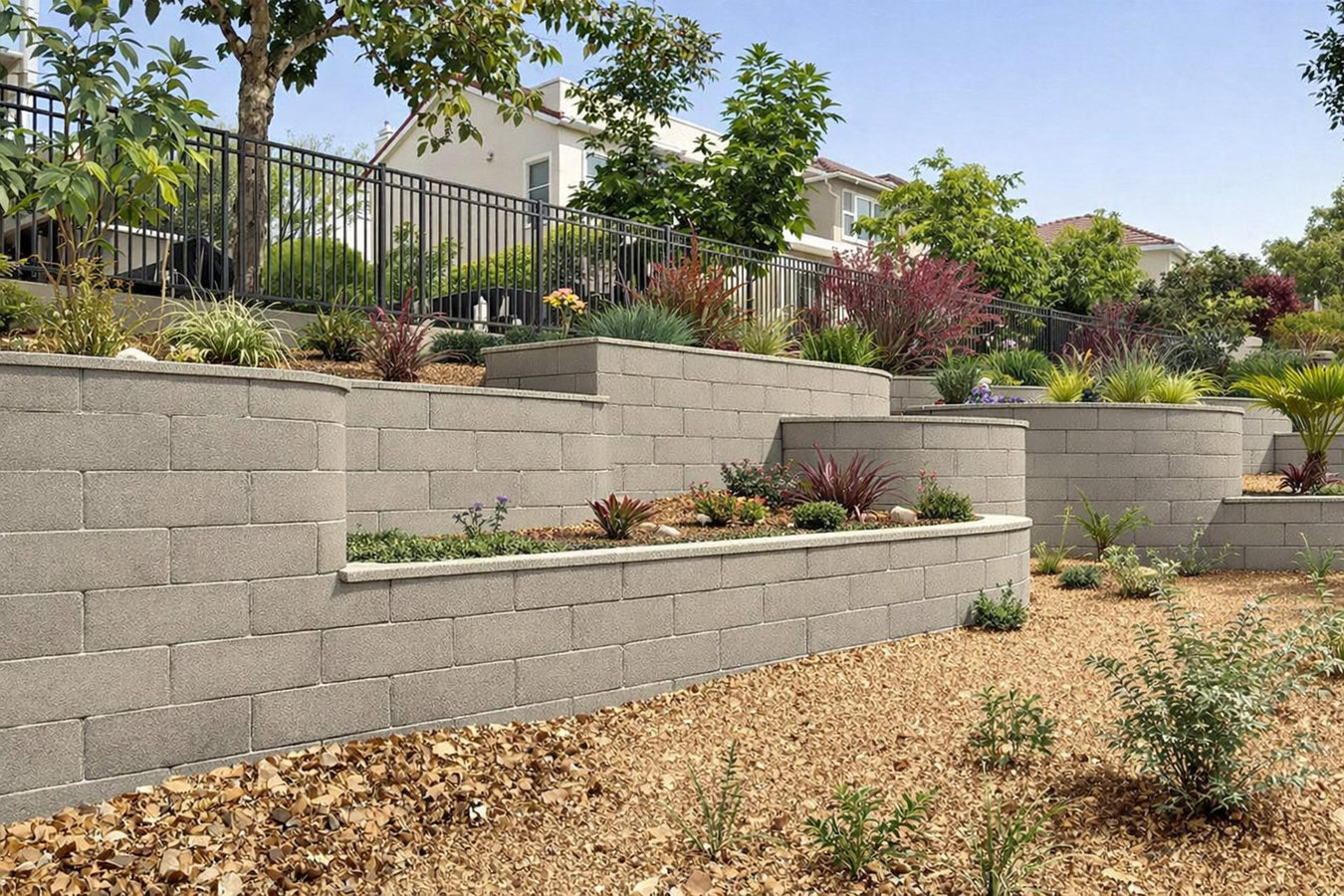
Sandy soil and summer storms move your yard a little more each year. A properly built retaining wall stops that - and stays standing for decades.
Concrete retaining walls in Palm Bay hold back soil on slopes and raised areas so it does not wash away, settle unevenly, or push against your foundation - most residential projects take one to three days of active work and are designed specifically for Brevard County's sandy soil and heavy summer rain.
If you have watched a slope in your yard lose a little soil each rainy season, or noticed a driveway edge starting to drop, those are signs the ground beneath cannot hold itself in place. Concrete retaining walls in Palm Bay are one of the most durable fixes available - far longer-lasting than timber or railroad-tie walls that rot and lean over time. Many homeowners who call us for retaining walls also ask about concrete footings to anchor additional structures in the same project. We pull all required permits and coordinate the city inspection so you do not have to navigate the paperwork yourself.
Bare patches, exposed roots, or small channels carved into a slope after Palm Bay's summer storms are clear signs your soil is eroding. This is one of the most direct signals that a retaining wall is needed - the ground is telling you it cannot hold itself in place. Left alone, erosion gets worse each rainy season.
When the soil supporting a driveway edge, patio, or lawn area begins to shift, you will often see small cracks forming or a slight drop where the ground used to be level. In Palm Bay's sandy soil, this movement can happen faster than homeowners expect. A retaining wall stops the shift before it reaches your foundation or driveway slab.
If an older timber, block, or concrete wall is visibly tilting forward, has large cracks running through it, or has gaps at the base, it is no longer doing its job. Walls like this do not fix themselves - they continue to move until they fail, sometimes suddenly. Replacing it before that happens is far less disruptive than dealing with the damage after.
If rainwater consistently runs toward your house and sits against the foundation rather than draining away, a graded retaining wall can redirect that flow. In Palm Bay's flat, low-lying neighborhoods, this is a common problem - and one that gets worse over time if the grade is not corrected.
We build both poured concrete and concrete block retaining walls, and the right choice depends on the height of the wall, your site conditions, and how the finished surface needs to look. Poured concrete walls are monolithic and strong - a good fit for taller walls or areas where the ground has significant water pressure behind it. Concrete block walls offer more flexibility in height and shape, and they can be easier to tie into existing landscaping. Either way, drainage behind the wall is standard on every project - not an add-on. For homeowners planning additional concrete work nearby, our concrete floor installation service and concrete footings work can often be combined into a single project visit.
Every retaining wall project starts with a site visit - because no honest contractor can give you a real number without seeing the slope, the soil, and the space they are working in. We pull the required City of Palm Bay permits, arrange for underground utility lines to be marked before any digging, and do not consider the job finished until the city inspection is closed out. Our written estimate covers materials, labor, and permit fees upfront so the number you agree to is the number you pay.
Best for taller walls or sites with significant water pressure behind the slope - delivers maximum strength and a seamless finished face.
A strong choice when you need flexibility in height, shape, or integration with existing landscaping - and still want the longevity of concrete.
Ideal for Palm Bay yards that collect standing water after rain - gravel backfill and perforated pipe are built in to move water away from the wall.
Suits homeowners in HOA communities who need wall height compliance and a finished look that meets neighborhood design standards.
Palm Bay sits on sandy coastal plain soil that shifts easily - especially when it gets wet. Unlike denser clay soils found in other parts of the country, this sandy base does not hold its shape under pressure. That means retaining walls here need a deeper, more carefully compacted footing than walls built elsewhere. Brevard County also averages around 50 inches of rain per year, with intense afternoon storms concentrated from June through September. That volume of water hitting a slope in a short period puts real pressure on any wall. Drainage behind the wall is not optional in this environment - it is essential. Parts of Palm Bay near the St. Johns River watershed also sit at low elevations where the water table is close to the surface, which affects how deep a footing can go and how much drainage capacity is needed. Homeowners in neighborhoods like Rockledge to the north face similar sandy soil conditions and benefit from the same drainage-first approach.
The City of Palm Bay Building Division requires permits for retaining walls that exceed certain height thresholds, and those walls must pass inspection before the project is considered complete. For homeowners in planned communities - and Palm Bay has many, particularly in the Bayside Lakes area - HOA rules about wall height, materials, and appearance apply separately from city permits. We walk through the approval process with you before work begins so the finished wall meets both requirements from day one. Homeowners in Melbourne and surrounding Brevard communities face the same permit and HOA landscape, and we handle projects throughout the area.
We ask a few basic questions - wall location, rough dimensions, and any drainage issues you have noticed - then schedule an in-person site visit. We reply within one business day and never quote a real number without seeing the slope and soil first.
After the site visit, you receive a written estimate covering materials, labor, and permit fees. We tell you upfront whether a permit is required for your wall's height and handle pulling it - so there are no surprises when the invoice arrives.
Underground utility lines are marked before any digging starts - this is required by law. The crew digs the base, compacts the soil carefully to account for Palm Bay's sandy conditions, and prepares the footing. This is the noisiest part of the project.
The wall goes up with drainage material placed behind it as it is built - not as an afterthought. After concrete cures, which takes about a week, the city inspector reviews the work and the project is officially closed out. We clean up the site before we leave.
We reply within one business day. Written estimate, no pressure, no surprises.
(321) 294-0342Every wall we build accounts for Palm Bay's sandy soil and the drainage pressure that comes with 50 inches of annual rainfall. We dig the footing deeper, compact the base carefully, and always install drainage behind the wall. A wall built for these conditions holds up through rainy seasons - one that is not will start to lean within a few years.
The City of Palm Bay requires permits for retaining walls above a certain height, and we handle that process from start to finish. A city inspector reviews the finished work before we close out the project. That inspection is in your favor - it is an independent check that the job was done correctly, not just our word for it.
One of the biggest fears homeowners have is a vague number that climbs once work starts. Our written estimate covers materials, labor, and permit fees upfront - so the number you agree to is the number on the final invoice. We do not start work until you have approved it in writing.
Palm Bay has a large number of planned communities, and many HOAs have rules about wall height and materials that are separate from city permits. We walk through the HOA approval process with you before work begins so the finished wall meets both city and community requirements. The American Concrete Institute sets the standards our work is built to.
Every retaining wall we build is designed for the specific conditions of your site - not copied from a standard plan. That attention to local soil, drainage, and permitting is why our walls are still standing straight years after installation. The American Concrete Institute sets the standards we work to, and the City of Palm Bay Building Division inspects every permitted wall we build.
Pour a new concrete floor for your garage, addition, or utility space with proper base prep and moisture control for Palm Bay conditions.
Learn MoreAnchor fences, posts, and structures with poured concrete footings sized and depth-set for Brevard County's sandy soil.
Learn MoreSpots fill up before summer storms hit - call today or request your free written estimate and we will get back to you within one business day.